

Excel Route

STUDY IN NORWAY

Studying in Norway promises a unique blend of high-quality education and stunning natural beauty. Renowned for its progressive teaching methods and research contributions, Norway offers a wide array of English-taught programs. International students benefit from a safe and inclusive environment, along with opportunities for outdoor activities and exploration. With its rich cultural heritage and modern cities, Norway provides an enriching educational experience in one of Europe’s most scenic countries.

Table of Contents

Why study in Norway?

Norway stands as an enticing destination for international students seeking top-tier education in a picturesque and culturally rich environment. With its world-renowned universities and high quality of life, Norway consistently ranks among the top countries for education. According to the QS World University Rankings, several Norwegian institutions are globally recognised for their academic excellence. The country’s commitment to research and innovation further bolsters its appeal, making it an ideal choice for those looking to broaden their horizons.

Admission requirements in Norway

  • CV
  • A valid passport
  • 2 recommendation letters
  • All educational documents
  • Experience letter (in case of gap)
  • English language test, such as IELTS/PTE (if any)

Cost of studying in Norway

While Norway offers a high-quality education, it is essential to consider the financial aspects. On average, international students can expect to incur tuition fees ranging from 8,000 to 15,000 EUR per year. However, many public institutions offer tuition-free education for international students. Nonetheless, living expenses, including accommodation, food, transportation, and miscellaneous expenses, can amount to approximately 12,000 to 15,000 EUR annually, depending on the location and lifestyle choices.

Scholarships for international students in Norway

The Norwegian government, alongside various institutions, and private organizations, offers a plethora of scholarships and grants. The prestigious Quota Scheme, for instance, allocates full scholarships to students from certain developing countries. Furthermore, universities in Norway extend a range of merit-based scholarships to outstanding students, emphasising their commitment to fostering academic excellence on a global scale.

Student visa requirements in Norway

  • A valid passport
  • Corona vaccination certificate
  • Polio vaccination certificate
  • Visa application fee
  • Passport-sized pictures
  • Proof of enrolment
  • Details of health insurance policy (OSHC)
  • Financial proof that you can afford living expenses, tuition fees, return airfare, and expenses for dependents.

Post-Study Work Opportunities

International students in Norway can extend their stay through the Post-Study Work Permit upon completing their studies. This allows graduates to seek employment for up to 6 months while actively seeking a job in their field of study. Norway’s robust job market and high demand for skilled professionals make it an attractive destination for those looking to launch their careers on an international platform.

Book a Meeting with Expert

Are you interested in studying abroad but not sure where to start? Our team of experts is here to help! By filling out our simple meeting request form, you can schedule a one-on-one consultation to discuss your study abroad options, fees, scholarships, and more. We offer guidance for over 60 countries, so whether you’re interested in Europe, Asia, the Americas, or anywhere in between, we’ve got you covered.

Please book your meeting today and let us help you realise your study abroad dream.

  • Official name is the Kingdom of Norway
  • ‘Norway’ translates roughly as ‘path to the north’.
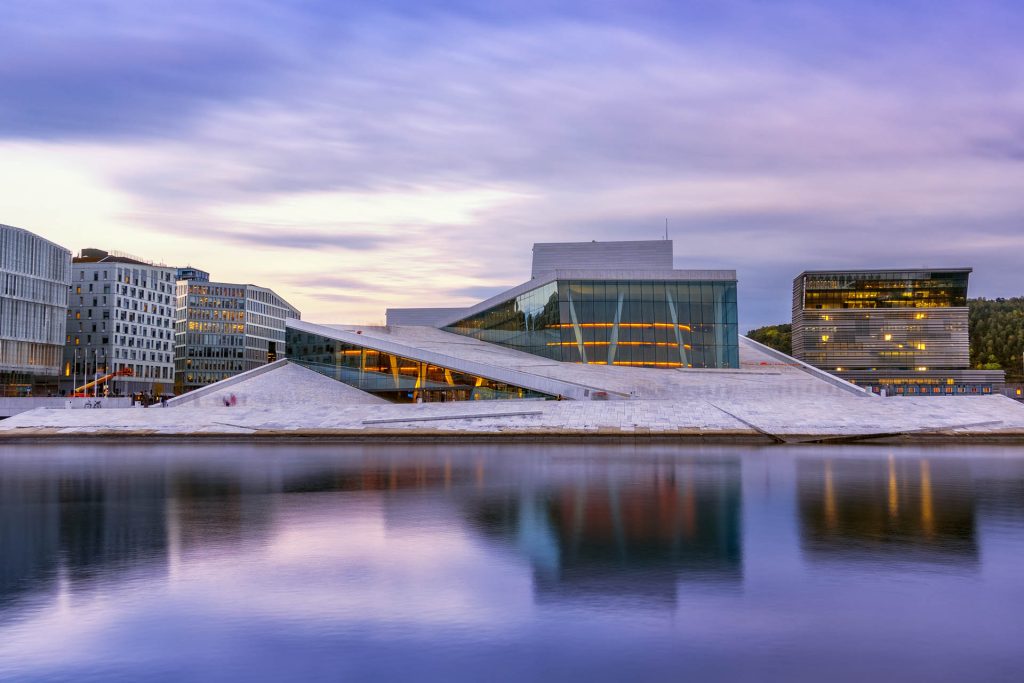
  • Capital city is Oslo
  • It has a Constitutional Monarchy (currently King Harald V – a largely ceremonial role) and a Parliamentary Democracy
  • The head of government is the Prime Minister (currently Erna Solberg)
  • Currency is Norwegian Krone
  • Average amount needed for living costs per year is €9,600 (~US$11,160)
  • Non-EU students can work up to 20 hours per week in their first year of study.
  • Major religion is Christianity (Lutheran Church of Norway)
  • Norwegian is the official language. Many Norwegians speak English as a second language.
  • The Norwegian language has two official written forms: Bokmål and Nynorsk, of which the vast majority uses Bokmål and Nynorsk is used mainly in the very South.
  • Europe’s northernmost country
  • Borders with Sweden, Finland and Russia
  • Shares longest uninterrupted border within Europe, with Sweden
  • Around the same size as Malaysia, but with a total population smaller than that of the Kuala Lumpur metropolitan area alone
  • Half of Norway’s surface area is mountainous.
  • There are as many Norwegian descendants living in the US as there are Norwegians in Norway (according to the US Census Bureau)
  • 99 per cent of Norway’s electricity comes from hydropower.
  • Early adopter of women’s rights, minority rights, and LGBT rights
  • First Scandinavian country to legalise same-sex marriage
  • Major exports are petrol, oil, gas, arms, black metal, machinery, chemicals and fish.
  • Time zone is Central European Time (UTC+1), UTC+2 in the summer.
  • International dialling code is +47

Join our Mailing list!

Get all latest news, exclusive deals and academy updates.